

Publish date: Dec 16th, 2025 16:54 UTC+1
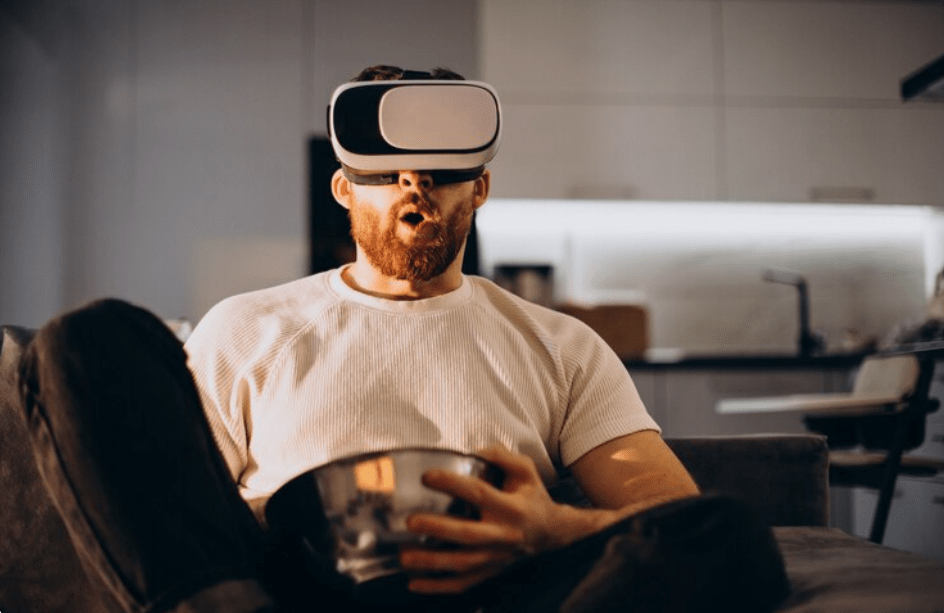
Virtual reality changes how closeness is experienced, adjusting simple voice chats into shared spaces that feel almost physical. Spatial audio, controller gestures and tiny head movements create micro signals the brain reads as presence, not just video. Long distance couples already use shared virtual rooms to watch films, sit on a balcony scene together or talk in a quiet corner of a busy hub.
Because presence and agency combine, the body often reacts as if the situation were offline. Heart rate climbs in tense scenes, comfort rises when a trusted avatar sits closer, and arguments can feel just as draining as in the same room. That intensity is exactly why VR intimacy needs clear boundaries, not just good hardware.
Adult VR as one branch of simulated closeness
Intimacy in VR does not stop at cuddly social spaces. Adult oriented experiences have become a visible part of the ecosystem, from stylised clubs to fully scripted scenes. Platforms such as SexLikeReal focus on explicit VR content for adults, sitting alongside more neutral social and gaming apps in the same headset.
For some users this offers private exploration in a controlled, repeatable format. For others it can blur the line between fantasy and expectation if there is no conscious reflection. The design of these experiences matters a lot. Short, clearly framed sessions with obvious age gates and safety tools support healthier use than endless loops that push people to stay "just a bit longer".
Presence, touch and how the brain responds
Psychology studies repeatedly show that strong immersion increases both emotional arousal and perceived realism. Multi sensory cues in virtual environments raise skin conductance responses and deepen the feeling of "being there". When stereoscopic video, responsive controllers and haptics line up, the overlap between real and simulated experience in brain activity reaches roughly 70 to 85 percent.
Avatar choice adds another layer. Around 61 percent of users prefer idealised avatars that look more attractive or confident than their offline self. When people move and speak through those bodies, behaviour often shifts too, a pattern known as the Proteus Effect. Roughly 33 percent of social VR users experiment with another gender presentation, testing how others respond and how it feels internally.
Connection, attachment and social VR
A large share of headset time goes into simply being with others. Roughly 45 percent of usage in social VR happens in clubs, hangout spaces and shared worlds rather than structured games. People build routines there, like meeting the same group every Friday night or taking daily walks in a virtual park.
AI driven companions are emerging beside human contacts, forming a market estimated around 900 million dollars in 2025. These agents never log off, remember previous talks and can mirror emotional tone. Most people still use VR as a supplement to offline ties, with about 23 percent leaning on VR social spaces as a primary outlet and 77 percent treating them as an extra layer. Research on social presence highlights how eye contact, proximity and quick responses tighten the sense of "being with" someone, even when every signal is digital.
Boundaries, consent and healthier use
Because VR intimacy can feel real, design and personal rules should treat it seriously. Good platforms increasingly add consent prompts around recording, clearer avatar blocking tools and stricter age checks for mature worlds. On the user side, it helps to treat sessions like any other intense experience, with preparation and recovery.
A simple personal framework can look like this:
- Decide how long the session should last before putting on the headset.
- Keep at least some relationships anchored in voice or video outside VR.
- Avoid heavy emotional conversations when feeling exhausted or unstable.
- Check how moods and real life motivation look after longer sessions.
These habits reduce the risk of dependence and keep simulated contact in perspective. VR can support therapy, social skills and connection, but it should not silently replace every offline source of comfort. Intimacy in headsets is still intimacy, just routed through software. The more clearly that is recognised, the easier it becomes to enjoy what VR offers without letting simulations quietly redefine every expectation about touch, trust and long term bonds.